SCARAB – Transmutation of Fate (EP/Review)
With Transmutation of Fate, Egypt’s SCARAB deliver a release that functions less as a conventional EP and more as a ritualized summation of their 20-year trajectory. This is death metal rooted in extremity, but elevated by intent: atmosphere, symbolism, and narrative coherence are treated as weapons equal to riffs and blast beats. While the band retains its core brutality, the music expands into darker, more immersive territory—dense arrangements, layered harmonics, and a palpable sense of ceremony. SCARAB’s use of neoglyphic concepts and ancient phonetic incantations is not aesthetic posturing; it actively shapes the cadence, tension, and pacing of the material, giving the EP a distinctly arcane character that separates it from standard genre output.
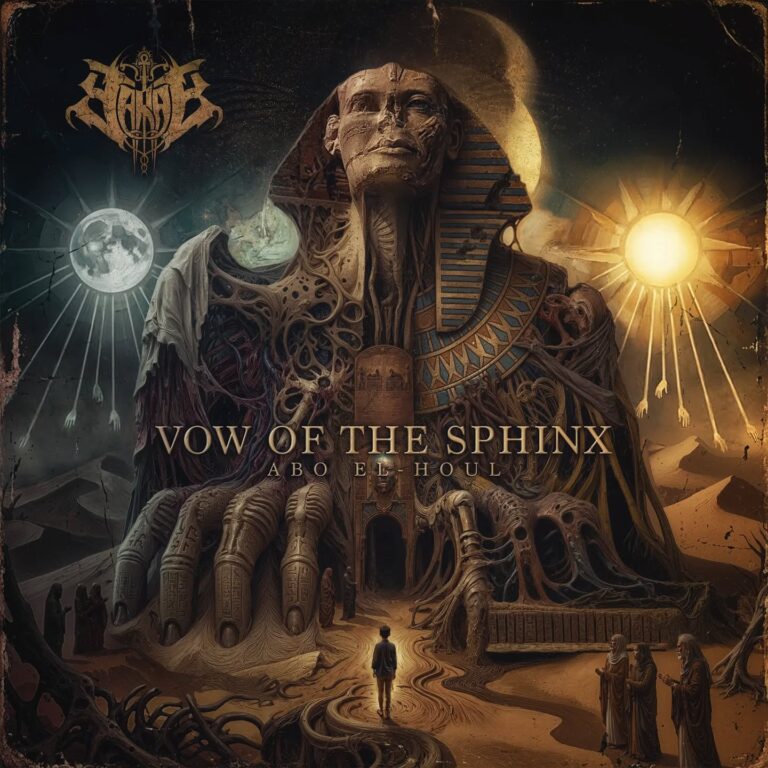
Conceptually, Transmutation of Fate is anchored in alchemical philosophy, specifically the Magnum Opus—the process of turning base matter into something transcendent. This idea is mirrored in the music itself: riffs conceived across two decades are reforged through modern arrangement and production, emerging sharper, heavier, and more purposeful. Tracks like “Vow of the Sphinx {Abou El-Houl}” serve as the EP’s keystone, channeling themes of awakening, buried memory, and spiritual resolve, while later compositions deepen the sense of karmic reckoning and closure. Rather than sounding dated, these resurrected ideas benefit from restraint and maturity; the band’s patience allows the songs to breathe, strike, and linger with authority.
What ultimately defines Transmutation of Fate is its sense of necessity. This release feels inevitable—an energetic clearing of the past that allows SCARAB to move forward unburdened. The EP stands as musical archaeology and future declaration simultaneously, honoring origins without being confined by them. Backed by Brutal Records, SCARAB enter a new era with clarity, conviction, and a sharpened vision. Transmutation of Fate is not just a milestone in the band’s history—it is a threshold, and crossing it was long overdue.
Track-by-Track Analysis: SCARAB – Transmutation of Fate
On Transmutation of Fate, SCARAB approach composition as ritual architecture. Each track functions as a distinct chamber within a larger alchemical process, progressing from awakening to confrontation, revelation, and finally domination. Below is a detailed examination of how each song contributes to the EP’s transformative arc—both musically and conceptually.
1. Vow of the Sphinx {Abou El-Houl}
The EP opens with its ideological and spiritual foundation. “Vow of the Sphinx” is constructed as an invocation—slowly unfolding, patient, and imposing. The riffs are carved with deliberate weight, favoring massive, hypnotic repetition over immediacy. Rhythmically, the track balances crushing low-end churn with sudden accelerations, evoking the sensation of something ancient stirring beneath the sand.
Lyrically and thematically, this is the moment of awakening: the Magus stands before forgotten knowledge and chooses remembrance over oblivion. The song’s atmosphere carries a sense of concealed power—SCARAB are not rushing the reveal. Instead, they allow tension to accumulate, mirroring the idea of withheld wisdom finally stepping into the light. It is both an oath and a threshold, setting the tone for everything that follows.
2. Hands from the Sun {Amon}
Where the opener awakens, “Hands from the Sun” asserts force. This track is more aggressive in its forward motion, driven by sharper tremolo lines and more pronounced rhythmic violence. The drumming emphasizes ritualistic repetition, creating a relentless pulse that feels ceremonial rather than purely technical.
Conceptually aligned with Amon—divine authority and hidden sovereignty—the song radiates dominance and illumination through destruction. There is an underlying sense of inevitability here: the riffs feel less exploratory and more declarative, as if the transformation initiated in the first track has now become irreversible. SCARAB harness solar symbolism not as enlightenment, but as annihilating clarity.
3. Epistle of Secrets {Creators of III}
The EP’s most introspective and layered composition, “Epistle of Secrets” operates as the axis of reflection within Transmutation of Fate. Musically, the track alternates between suffocating density and moments of ominous space, allowing melodies to surface like coded messages buried within the chaos.
The outro riff—historically rooted in SCARAB’s earliest creative period—carries immense emotional and symbolic weight. Its reemergence does not feel nostalgic; rather, it feels resolved. This is musical karma being untied in real time. The track embodies transmission: knowledge passed, hidden, and finally decrypted. It is here that the EP most clearly demonstrates how time itself has become a compositional tool.
4. Monarch of Violence {Oriasirius}
Closing the EP is its most commanding statement. “Monarch of Violence” does not rush toward an ending; it conquers it. The riffs are militant and authoritarian, locking into mid-to-up-tempo structures that emphasize control over chaos. There is a predatory precision in the arrangement—every accent, stop, and surge feels intentional.
Thematically, the track represents sovereignty after transmutation. Violence here is not blind rage but disciplined force—the final form achieved after spiritual and karmic purification. SCARAB end the EP not with collapse, but with ascension through dominance, leaving the listener with the impression that something has been sealed, crowned, and unleashed.
Final Perspective
Each track on Transmutation of Fate serves a specific function within a unified alchemical process. SCARAB resist the temptation to treat songs as standalone weapons; instead, they operate as interdependent stages of transformation. The EP’s strength lies in its patience, narrative cohesion, and refusal to compromise atmosphere for immediacy.
This is death metal forged through time, intention, and self-awareness—ancient in spirit, contemporary in execution, and uncompromising in vision.